



 I love garlic bread !!


Sketches of Future TSX, NSX, Fit & Accord

Thread Starter
Lead Lap


Joined: Dec 2005
Posts: 4,428
Likes: 10
From: NC
 Sketches of Future TSX, NSX, Fit & Accord
The pics work for me but if they do not work for you, here is a link:
Temple of VTEC
TSX

NSX

Fit

Accord

Last edited by GS69; Sep 13, 2006 at 11:33 AM.

CL Community Team


Joined: Oct 2002
Posts: 30,283
Likes: 363
From: Canada

Lexus Champion

Joined: Jun 2006
Posts: 4,192
Likes: 3
From: none

ahh, thanks for the link.
So basically, the Fit will look like the new CR-V, the Accord will look like the CSX, the TSX will look like the current TL and the new NSX will look like the last gen TL hahaha.
So basically, the Fit will look like the new CR-V, the Accord will look like the CSX, the TSX will look like the current TL and the new NSX will look like the last gen TL hahaha.
CL Community Team
Joined: Oct 2002
Posts: 30,283
Likes: 363
From: Canada
Trending Topics
Lexus Champion
Joined: Jun 2006
Posts: 4,192
Likes: 3
From: none
I guess power really. Most keep saying they're using turbo to get more power while using less fuel. However, the Murano with a 3.5 litre V6 gets better mileage (and a tad more power) than the RDX. Even the heavier RX350 gets better mileage. The only one that's slightly worse is the CX-7
ClubLexus Stories
Celebrating Lexus & Toyota from Around the Globe

Lexus NX 350h: A Fuel-Sipping Secret Hot Hatch???
Michael S. Palmer
5 Best & 5 Worst Lexus Daily Drivers
Joe Kucinski
Top 5 Hottest Lexus & Toyotas in 2026 (Hardest To Buy)
Brett Foote
2026 Lexus IS 350 F Sport Review: The Last of Its Kind Still Rocks
Michael S. Palmer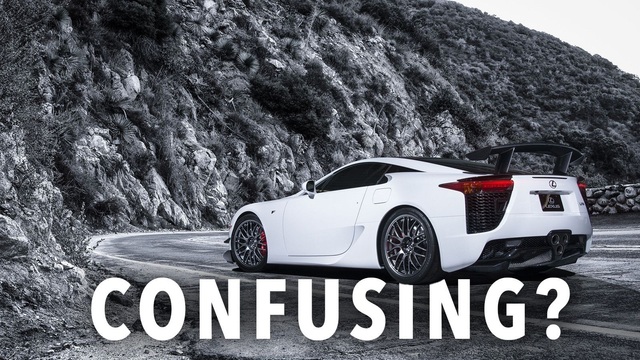
Top 10 Most Confusing Things Lexus Has Ever Done!
Joe Kucinski
2026 Lexus ES Review: Lexus Re-Embraces Founding Principles
Michael S. Palmer
10 Lexus Bargains That are Cheaper Than a New Toyota RAV4
Joe Kucinski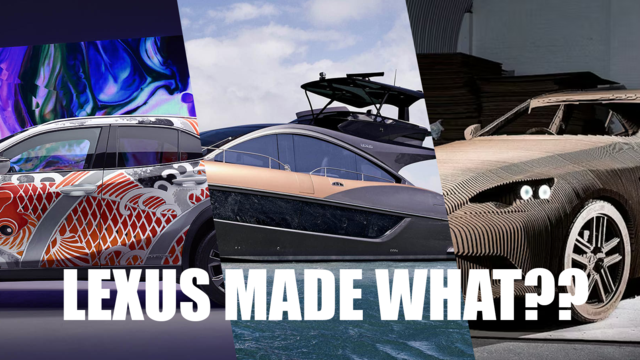
8 Weirdest Things Lexus Has Ever Built
Verdad Gallardo
10 Lexus Designs That Have Aged Like Fine Wine
Verdad Gallardo
they didnt want to put a V6 in the RDX because it would make the front heavier was one of their main reasons going turbo 4. Also the new MDX is going to have a V6, no sense in making the RDX V6, dont want to turn the MDX into another RL. Turbos always make worse mileage vs an equivalent N/A anyways
 mmmmmmmm Turbo
I can honestly say that I'm really disappointed with every car shown there. The NSX is probably the biggest disappointment. It just looks OLD. That TSX looks like a GM concept car for some reason. And if the new Accord looks like the new Civic...
Lexus Champion
Joined: Jun 2006
Posts: 4,192
Likes: 3
From: none
they didnt want to put a V6 in the RDX because it would make the front heavier was one of their main reasons going turbo 4. Also the new MDX is going to have a V6, no sense in making the RDX V6, dont want to turn the MDX into another RL. Turbos always make worse mileage vs an equivalent N/A anyways

Lexus Test Driver
Joined: Mar 2003
Posts: 1,243
Likes: 0
From: Maryland
Under a moderately heavy load and actually making some power, a smaller displacement turbo engine will make that power "more efficiently" than a larger NA engine, but in cars most of the time the engine is not under much of a load so that's really a moot point. It doesn't stop marketers from using it though. They might quote a 10% improvement in efficiency looking at some narrow area of an engine's BSFC map vs another, nevermind the fact that the engine will rarely if ever be operating in that range and that it's irrelevant.

