Toyota invests in the Earth : National Post (Canadian) Article


Thread Starter
CL Community Team


Joined: Oct 2002
Posts: 30,281
Likes: 362
From: Canada
 Toyota invests in the Earth : National Post (Canadian) Article
Toyota invests in the Earth
Yoichi Tomihara, President and CEO, Toyota Canada Inc., Special to the Financial Post
Published: Thursday, September 27, 2007
Now, more than at any time in our history, people are concerned about the health of our planet. The state of our environment has become one of the most hotly contested issues in recent memory.
Increasingly in Canada, popular opinion is that climate change and global warming are real issues that must be addressed.
Many years ago, Toyota realized that by the time scientists could prove that climate change was a threat, it would likely be too late to do anything about it.
We therefore decided the responsible approach was to examine the environmental consequences of our products and our operations, and then develop and implement new technologies and processes to minimize our impact.
These environmental goals were easy to incorporate into our business activities because our corporate blueprint, known as The Toyota Way, contains principles that encourage this.
The first is well known. "Kaizen," a term meaning "continuous improvement," has revolutionized manufacturing and other businesses around the world. This constant search for new ways to make things better has been a pillar of Toyota's success, and it makes our company very open to change.
The second principle is equally important. "Muda" is the elimination of waste. At Toyota, this encompasses everything from wasted material, over-production, over-processing and excess inventory, to wasted waiting time, unnecessary movements, defective work, and unused employee creativity.
When we applied these principles to the question of environmental stewardship, we quickly realized that this was not just the right thing to do--it was also a savvy approach to doing business and the only strategy that makes sense.
While the oil crisis of the 1970s was unexpected, the environmental crisis of today is one for which we've been preparing for some time.
Toyota Motor Corp.'s chairman, Fujio Cho, warned in the 1990s that "there is no future for the automotive industry without the promotion of environmental technology." At the time, Toyota was convinced that only companies that succeed in this area would be acceptable to society. We are even more convinced of this today.
For many years now, Toyota has been reducing energy consumption and eliminating waste from all of its operations around the world. At the same time, we have worked diligently to ensure environmental stewardship informs our research and development activities. This is why Toyota has invested so heavily in fuelefficient engines, emission-fighting systems and advanced technologies.
Each year, Toyota offers several models that are recognized by the federal government's EnerGuide program as the most fuel-efficient vehicles in their respective classes. We were also pleased --but not surprised-- that so many Toyota vehicles qualified for the ecoAuto rebate announced by Ottawa earlier this year.
One reason for this is that Toyota now offers the largest, most diverse range of fuelefficient, low-emission, gasoline-electric hybrid vehicles available in Canada.
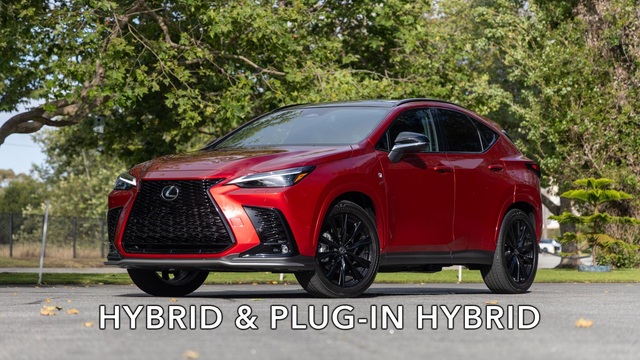
Our hybrid lineup includes: the Toyota Prius, the bestselling hybrid vehicle on the planet; hybrid versions of our best-selling Toyota Camry midsize sedan (which became the Automobile Journalists Association of Canada 2007 Canadian Car of the Year) and popular Toyota Highlander SUV; and three luxury hybrid vehicles, including the Lexus RX400h, Lexus GS 450h and the all-new Lexus LS 600h L, which represents the most technologically advanced implementation of hybrid technology to date--by any manufacturer.
We are convinced that the hybrid power system will play an important role in the future of the automobile for a number of reasons.
Hybrids are available today, use the existing fuel infrastructure, and look and drive like a conventional vehicle. This is important because our experience tells us the way to ensure people adopt a new technology is to make it familiar and comfortable to use. Consumers do not need to sacrifice the performance, convenience, range, comfort or style of their current automobile when switching to a hybrid.
The ability to capture, store and reuse energy that would otherwise be wasted means hybrids consume less fuel than an equivalent, conventionally powered automobile.
At the same time, hybrids produce significantly reduced harmful tailpipe emissions, making them an environmentally responsible alternative.
Many people around the world obviously agree with us, because earlier this year Toyota celebrated the sale of the one-millionth hybrid-powered vehicle worldwide. This milestone, achieved in just 10 years, should bury any lasting doubts about whether hybrids are a viable alternative, and we expect hybrid sales to accelerate in the coming years.
But Toyota's hybrid system is not just a current-day solution. It's also a platform for future developments. As new technologies such as hydrogen fuel cells are brought to commercial readiness, we will be able to replace the gasoline engine portion of the hybrid system.
Many other components -- such as high-torque electric motors, generators, storage batteries and the power management system that controls the drivetrain - are ready for next-generation energy sources.
If the environment is to become the new battleground in the auto industry, then the ultimate winner is the planet itself - and since the Earth is the only home we have, that's a good thing.
© National Post 2007
Yoichi Tomihara, President and CEO, Toyota Canada Inc., Special to the Financial Post
Published: Thursday, September 27, 2007
Now, more than at any time in our history, people are concerned about the health of our planet. The state of our environment has become one of the most hotly contested issues in recent memory.
Increasingly in Canada, popular opinion is that climate change and global warming are real issues that must be addressed.
Many years ago, Toyota realized that by the time scientists could prove that climate change was a threat, it would likely be too late to do anything about it.
We therefore decided the responsible approach was to examine the environmental consequences of our products and our operations, and then develop and implement new technologies and processes to minimize our impact.
These environmental goals were easy to incorporate into our business activities because our corporate blueprint, known as The Toyota Way, contains principles that encourage this.
The first is well known. "Kaizen," a term meaning "continuous improvement," has revolutionized manufacturing and other businesses around the world. This constant search for new ways to make things better has been a pillar of Toyota's success, and it makes our company very open to change.
The second principle is equally important. "Muda" is the elimination of waste. At Toyota, this encompasses everything from wasted material, over-production, over-processing and excess inventory, to wasted waiting time, unnecessary movements, defective work, and unused employee creativity.
When we applied these principles to the question of environmental stewardship, we quickly realized that this was not just the right thing to do--it was also a savvy approach to doing business and the only strategy that makes sense.
While the oil crisis of the 1970s was unexpected, the environmental crisis of today is one for which we've been preparing for some time.
Toyota Motor Corp.'s chairman, Fujio Cho, warned in the 1990s that "there is no future for the automotive industry without the promotion of environmental technology." At the time, Toyota was convinced that only companies that succeed in this area would be acceptable to society. We are even more convinced of this today.
For many years now, Toyota has been reducing energy consumption and eliminating waste from all of its operations around the world. At the same time, we have worked diligently to ensure environmental stewardship informs our research and development activities. This is why Toyota has invested so heavily in fuelefficient engines, emission-fighting systems and advanced technologies.
Each year, Toyota offers several models that are recognized by the federal government's EnerGuide program as the most fuel-efficient vehicles in their respective classes. We were also pleased --but not surprised-- that so many Toyota vehicles qualified for the ecoAuto rebate announced by Ottawa earlier this year.
One reason for this is that Toyota now offers the largest, most diverse range of fuelefficient, low-emission, gasoline-electric hybrid vehicles available in Canada.
Our hybrid lineup includes: the Toyota Prius, the bestselling hybrid vehicle on the planet; hybrid versions of our best-selling Toyota Camry midsize sedan (which became the Automobile Journalists Association of Canada 2007 Canadian Car of the Year) and popular Toyota Highlander SUV; and three luxury hybrid vehicles, including the Lexus RX400h, Lexus GS 450h and the all-new Lexus LS 600h L, which represents the most technologically advanced implementation of hybrid technology to date--by any manufacturer.
We are convinced that the hybrid power system will play an important role in the future of the automobile for a number of reasons.
Hybrids are available today, use the existing fuel infrastructure, and look and drive like a conventional vehicle. This is important because our experience tells us the way to ensure people adopt a new technology is to make it familiar and comfortable to use. Consumers do not need to sacrifice the performance, convenience, range, comfort or style of their current automobile when switching to a hybrid.
The ability to capture, store and reuse energy that would otherwise be wasted means hybrids consume less fuel than an equivalent, conventionally powered automobile.
At the same time, hybrids produce significantly reduced harmful tailpipe emissions, making them an environmentally responsible alternative.
Many people around the world obviously agree with us, because earlier this year Toyota celebrated the sale of the one-millionth hybrid-powered vehicle worldwide. This milestone, achieved in just 10 years, should bury any lasting doubts about whether hybrids are a viable alternative, and we expect hybrid sales to accelerate in the coming years.
But Toyota's hybrid system is not just a current-day solution. It's also a platform for future developments. As new technologies such as hydrogen fuel cells are brought to commercial readiness, we will be able to replace the gasoline engine portion of the hybrid system.
Many other components -- such as high-torque electric motors, generators, storage batteries and the power management system that controls the drivetrain - are ready for next-generation energy sources.
If the environment is to become the new battleground in the auto industry, then the ultimate winner is the planet itself - and since the Earth is the only home we have, that's a good thing.
© National Post 2007
.


Lead Lap
Joined: Jun 2007
Posts: 447
Likes: 0
From: CA
Another "green" article from Toyota.
I'd be interested to know what the average sales-weighted mpg is for each of the major manufacturers. I'd bet that they are all pretty similar.
Toyota does make a lot of gas-efficient vehicles (mainly hybrids), but it also makes a ton of gas-guzzling SUVs and trucks.
I'd be interested to know what the average sales-weighted mpg is for each of the major manufacturers. I'd bet that they are all pretty similar.
Toyota does make a lot of gas-efficient vehicles (mainly hybrids), but it also makes a ton of gas-guzzling SUVs and trucks.

Lexus Fanatic
Joined: Jan 2005
Posts: 20,244
Likes: 275
Another "green" article from Toyota.
I'd be interested to know what the average sales-weighted mpg is for each of the major manufacturers. I'd bet that they are all pretty similar.
Toyota does make a lot of gas-efficient vehicles (mainly hybrids), but it also makes a ton of gas-guzzling SUVs and trucks.
I'd be interested to know what the average sales-weighted mpg is for each of the major manufacturers. I'd bet that they are all pretty similar.
Toyota does make a lot of gas-efficient vehicles (mainly hybrids), but it also makes a ton of gas-guzzling SUVs and trucks.
Which is pretty impressive considering how many trucks and SUV's Toyota has compared to Honda (and V8's too)...

Thread
Thread Starter
Forum
Replies
Last Post
GFerg
Car Chat
10
Nov 6, 2007 12:13 PM